

Automation: the power force in biomedical research
Regner® Editorial Team
Aiguaviva -
20/11/2023

Automation in biomedical investigation; promoting research instead of wasting valuable time. Biomedical investigation is a nonstop growing field, driven by the research for disease solutions. The improvement of treatments and the deeper comprehension of the human body. In this discovery process, automation performs a crucial part, as it helps medical investigation laboratories accelerate their experiments and progress in the reach for quality solutions.
Automation and motion control are key tools that have turned to be essential.
Automation: the power force in biomedical research
Referring to the implementation of robotic systems, controllers and actuators carry out repetitive but precise tasks, that are essential in the laboratory. This allows concentration in most valuable tasks, such as experimental design and result interpretation, while boring and repetitive activities are done by machines. Let’s highlight some of the most important aspects of automation in biomedical investigation.
Sample preparation and processing are such difficult steps in research. Pipetting automation, centrifugation and microliter plate handling, for example, allow high throughput testing to be performed consistently and accurately.
In high performance tests, automation is essential, as it includes the evaluation of thousands of compounds looking for biologic activity, being extremely useful to discover new medicines or therapies.
Biomedical investigation often requires conducting experiments in specific temperature and humidity conditions. So to carry them out they use automation systems that can regulate and control these conditions constantly, reducing the variability in results.
In data analysis, automation doesn’t just involve experiments execution, it also includes data analysis. Software automated algorithms can process a huge data set efficiently, identifying patrons and tendencies which could easily be ignored in manual analysis.
Tailored motion control solutions for biomedical research
Motion control systems are used to guide and coordinate robot operation, robotic arms, pipetting devices and other equipment. Some of the top applications are:
Sample manipulation, where robotic arms with precise actuators are used to handle samples, which guarantees that they are placed accurately in the desired locations in the Petri dish, microliter plate or others.
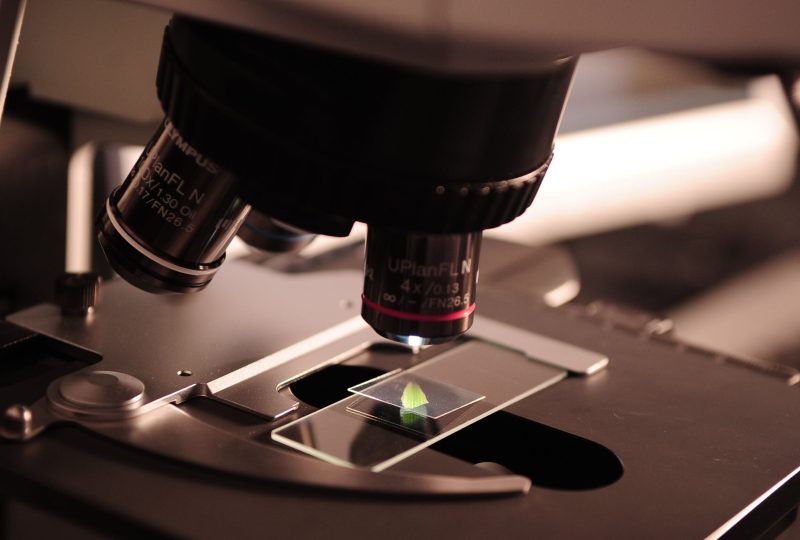
We also have high resolution microscopy; here, motion control systems allow the precise movement of microscopes, which is crucial for providing detailed images in cellular and tissue studies.
In liquid transfer, we need the precision of motion control systems to reduce the cross contamination, improving accuracy in experiments.
We also include compound screening, when we look for new medicines, motion control systems guide screening platforms that allow the fast evaluation of thousands of compounds, looking for biological activity.
Going forward in medical science
Motion control and automation have changed the functioning of research in the biomedical field, accelerating the velocity in which experiments are done, and improving the reproducibility of the results. This means significant improvements in the understanding of diseases, therapies development and the identification of new medicines.
