The electronics behind precise motion

REGNER Editorial Team
Aiguaviva ·
23/11/2026
regner_electronica_2026_Munich

REGNER visits electronica 2026 in Munich to explore the technologies shaping motion control.

From 10 to 13 November, Munich hosted another edition of electronica, one of the leading international trade fairs for electronic components, systems and technologies. Its motto, Empowering the All Electric Society, reflects the growing role of electronics across many industries.
Members of our team visited the fair to see the latest developments first-hand and catch up with suppliers we have worked with for many years.
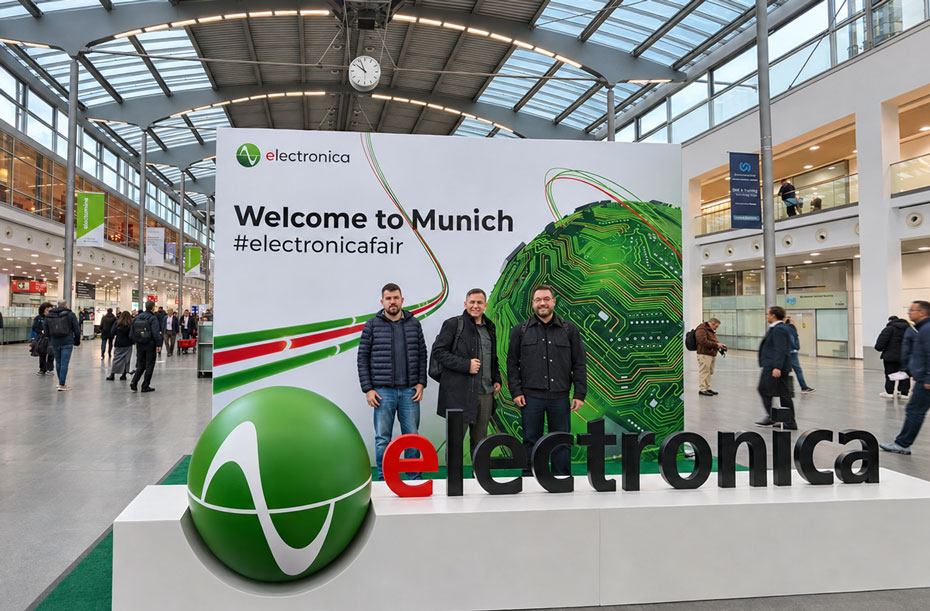
REGNER team at the electronica 2026 photo wall in Munich
Members of our team at the electronica 2026 photo wall.

Electronics are an integral part of many of the products we develop at REGNER. An electric linear actuator converts a motor’s rotation into linear motion. A growing number of applications also require that motion to be controlled, monitored and adapted to the equipment in which the actuator is installed.

More than a motor

In a linear actuator, the mechanical design largely determines force, stroke, speed and dimensions. Electronics add control, communication and safety functions.

Depending on the application, the electronics can manage the motor’s power supply, reverse its direction of rotation, regulate speed or monitor power consumption. Position sensors such as Hall sensors, linear potentiometers and encoders tell the system where the actuator is at any given time, allowing it to control travel more precisely.

The electronics can also provide overcurrent protection, detect stalls and manage travel limits. These functions are essential in equipment that must perform the same motion reliably thousands of times.

The challenge is to integrate the electronic functions each application needs.

More functions in less space

One of the main areas we explored was the evolution of printed circuit boards (PCBs) and their potential for miniaturisation.

Available space is one of the main design constraints in a compact actuator. Fitting components, connections and control electronics into a small space requires careful attention to board layout, heat dissipation and how the board fits into the mechanical assembly.

In the halls dedicated to PCBs and assembly, we saw technologies ranging from high-density interconnect (HDI) boards to flexible and rigid-flex boards. Rigid-flex boards allow circuits to fit complex geometries and make better use of the space inside a mechatronic system.

Miniaturisation adds value only when the design is reliable, easy to manufacture and supported by suitable verification methods.
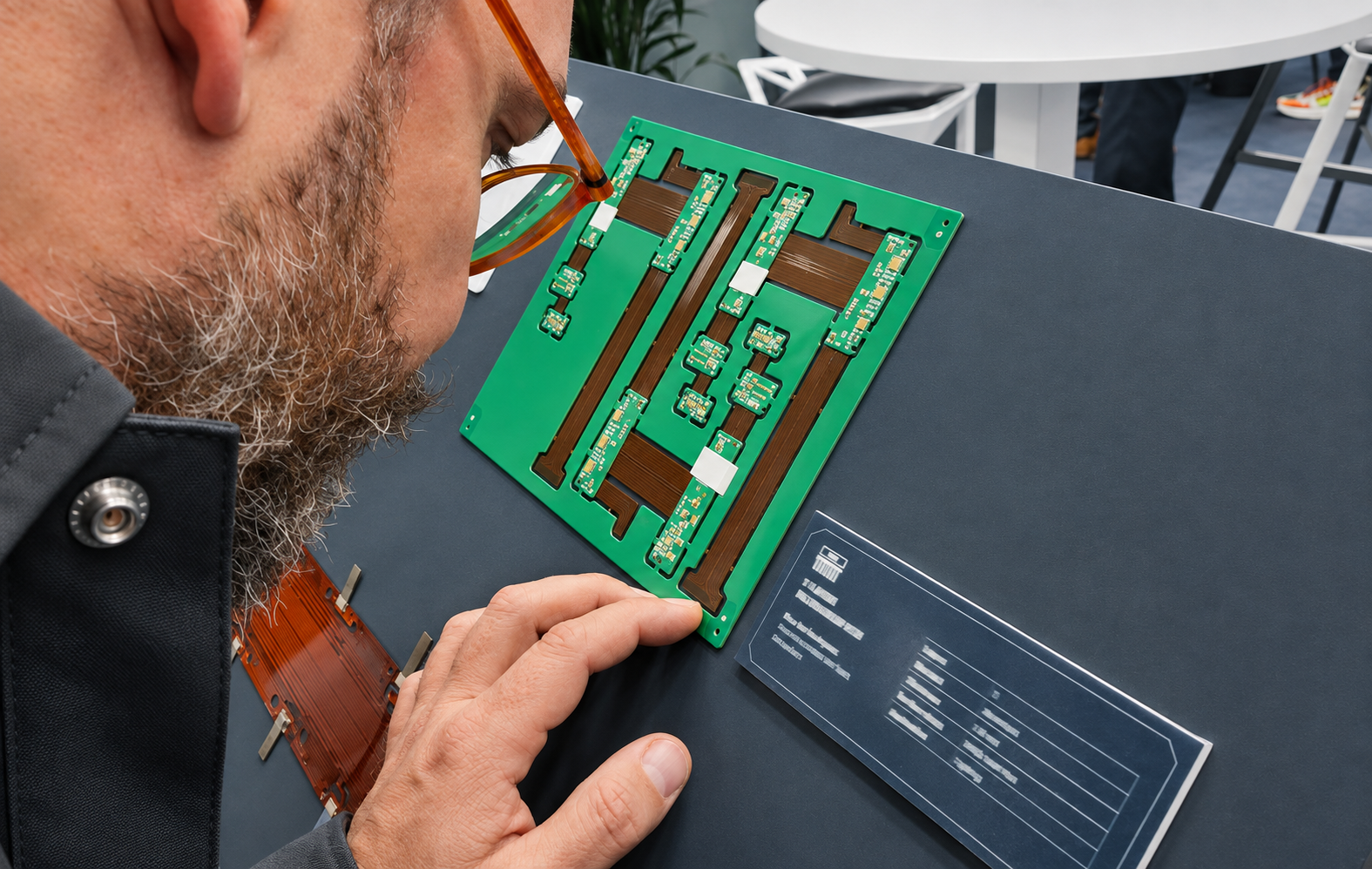
Printed circuit board samples at electronica 2026
Rigid and flexible circuit board samples at electronica 2026.

Sensors and control for the customer’s equipment

In fields such as medical technology, analytical instrumentation and laboratory automation, motion must meet specific requirements for precision, repeatability and safety.

By combining sensors, microcontrollers and power electronics, the actuator can monitor its own operation and communicate with the electronics in the customer’s equipment. This is particularly important when the manufacturer needs motion to fit its own communication protocols, control interfaces or operating conditions.

From electronic design to manufacturing

We also saw new developments in electronic circuit assembly, inspection and testing.

Board design, component selection, solder joint quality, thermal conditions and verification procedures all help determine whether a board will perform reliably over time.

That is why we consider functional requirements alongside manufacturing, assembly and quality control from the earliest stages of development.
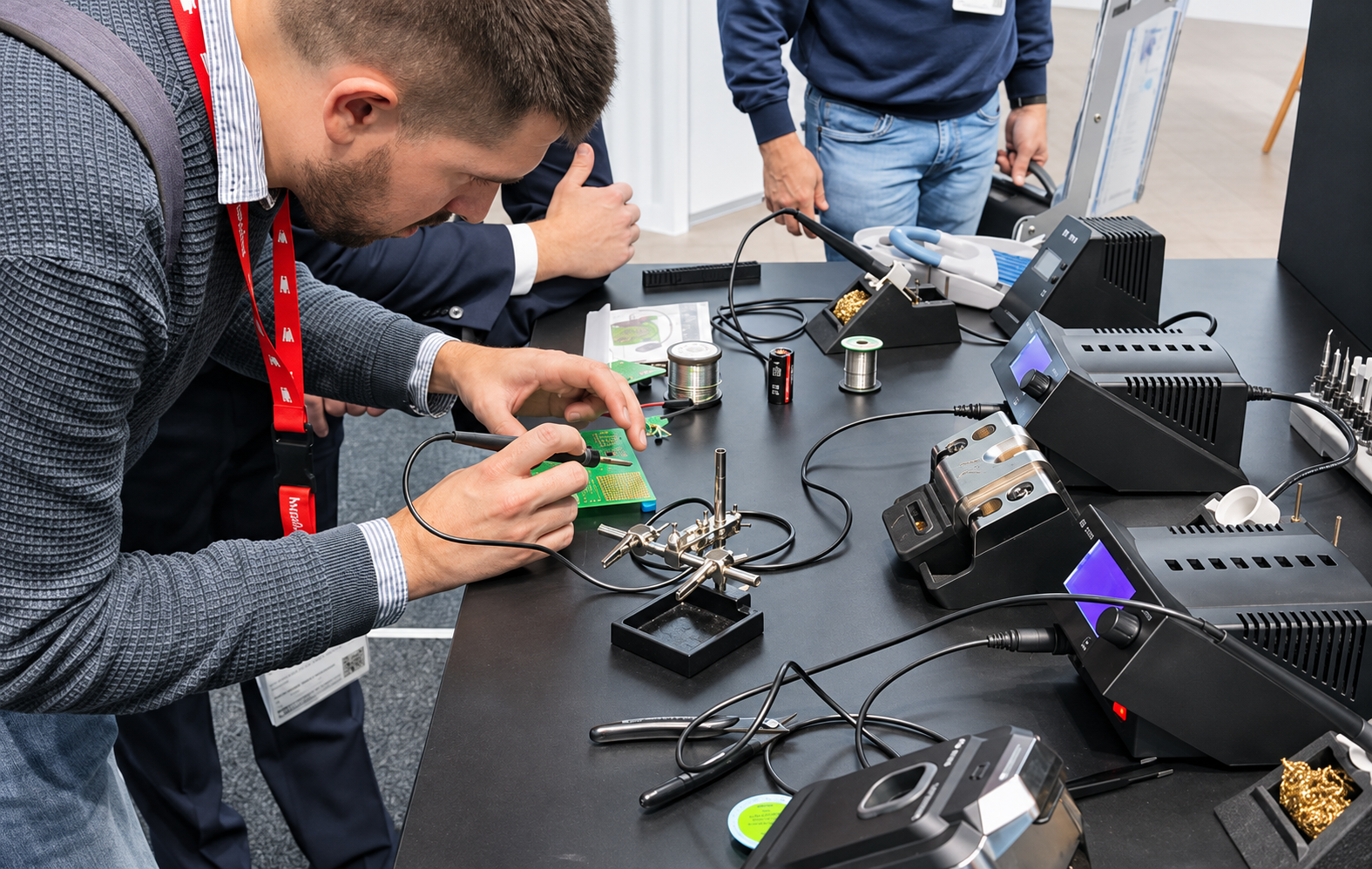
Electronics soldering demonstration at the trade fair
Soldering station demonstration at the trade fair.

In-house electronics and an integrated approach

At REGNER, electronics development is part of our engineering capability. We design and integrate circuit boards and control systems tailored to each customer, drawing on our expertise in mechanics, electronics and software.

Our visit to electronica 2026 reinforced this approach. When an application requires electronic control, mechanics, electronics and software need to be designed as parts of the same system. That lets us take on projects that call for more than a conventional actuator and define the motion itself, how it will be controlled and monitored, and how it will be integrated into the finished product.

We continue to explore technologies that help us solve our customers’ motion challenges in less space and with greater control.

×ATENCIÓ: Cookies no configurades en l'idioma actual. Revisa la teva configuració al plugin, gràcies!